From feather-light carbon frames to string tension science — your complete guide to badminton rackets, techniques, and the legends who made them famous.
Explore the Guide Take the QuizBadminton evolved from the British game "battledore and shuttlecock" in 19th-century India. The modern racket has transformed from heavy wooden frames to ultralight aerospace-grade carbon.
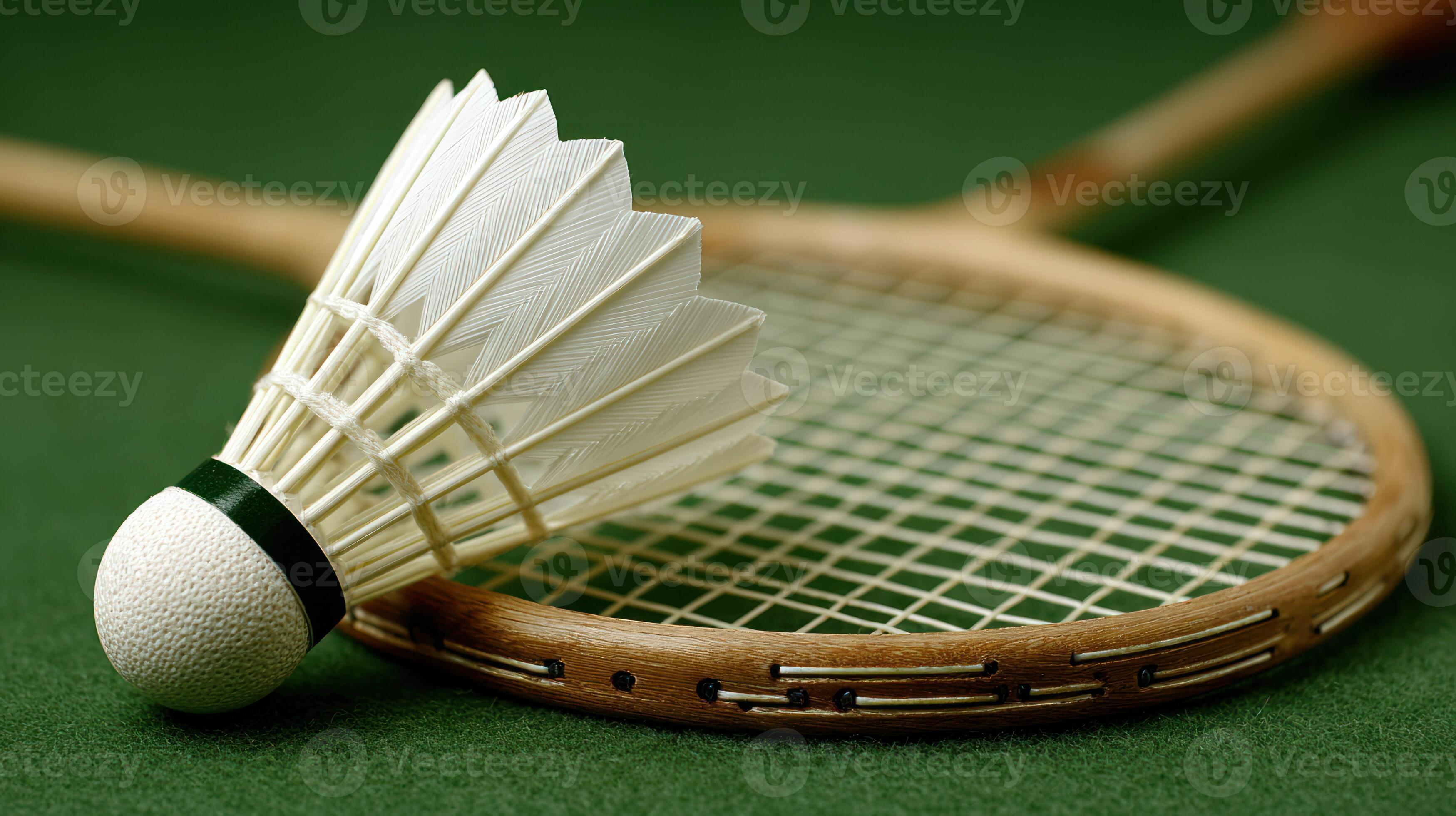
The earliest rackets were carved from solid wood, weighing over 150g with natural gut strings. Power came purely from the player's arm — precision was a luxury few could afford.
Metal frames dropped weight dramatically and added durability. The game became faster, rallies longer, and the smash began evolving into the weapon it is today.
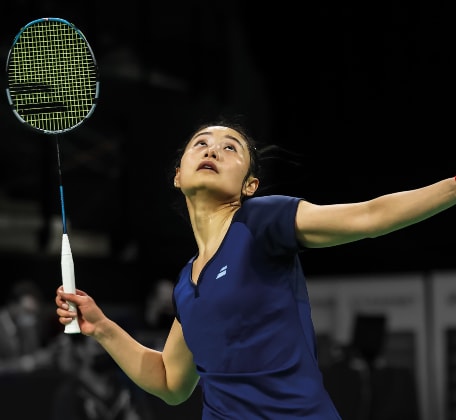
Graphite and carbon-fiber composites now dominate: full rackets weigh as little as 70–90g while handling smashes over 400 km/h. Every gram is engineered.
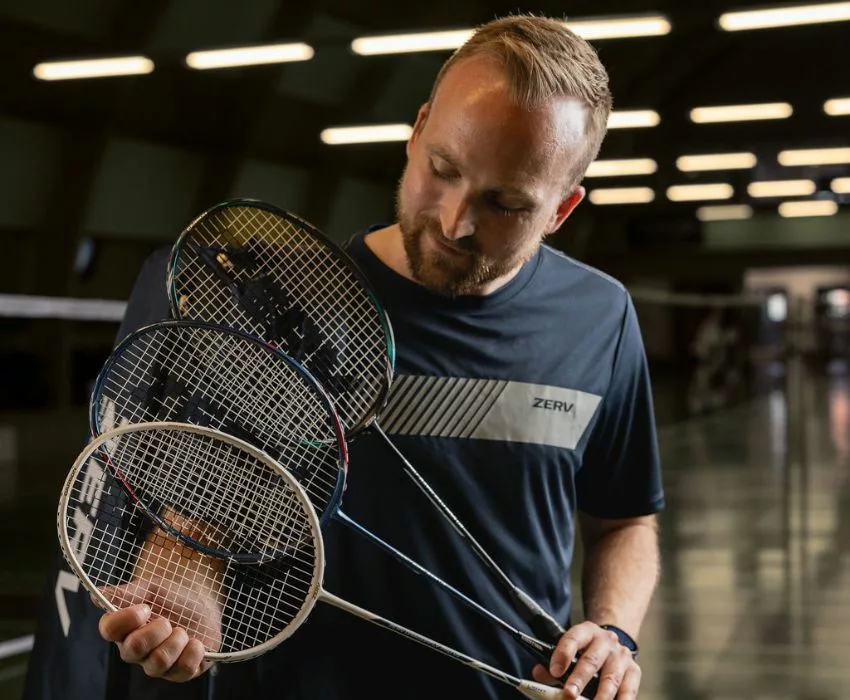
A modern badminton racket looks simple — but every part is a calculated engineering decision.
Pick your playing style — we'll recommend the specs that fit.
Higher tension = more control but demands perfect timing and stronger technique. Begin low, climb gradually.
| Tension (lbs) | Best For | Sweet Spot | Feel |
|---|---|---|---|
| 18–21 | Complete beginners / juniors | Very large, forgiving | Soft, easy power |
| 22–24 | Intermediate club players | Large | Balanced |
| 25–27 | Advanced players | Medium | Crisp, precise |
| 28–30+ | Professionals / elite smashers | Small, punishing | Board-hard control |
The players who redefined what a racket could do.
"Super Dan" — two-time Olympic gold medalist and five-time world champion. His explosive smash and unmatched footwork made him the standard of modern attacking badminton.
Three Olympic silver medals, 349 weeks as world No. 1. Renowned for his defense-to-attack transitions and the famous "LCW" reverse slice drop shot.
The queen of women's singles — Olympic champion and multiple world titles. Her ferocious pace and screaming celebrations changed the face of European badminton.
Five quick questions. How much of a badminton nerd are you?
Everything players ask before buying or restringing.
A common rule: restring as many times per year as you play per week. Competitive players restring every 2–4 weeks; casual players, every few months. Strings lose tension even sitting unused.
Yes — more mass behind the shuttle means harder smashes. But it also fatigues your arm and slows defense. Choose the heaviest racket you can swing comfortably for a full match.
Isometric heads flatten the string bed's shape, enlarging the sweet spot by roughly 7%. Oval heads concentrate power slightly more. For 95% of players, isometric is the forgiving, modern choice.
Feather (goose/duck) shuttles fly and decelerate like the pros use — best for competition and serious training. Nylon shuttles last far longer and are ideal for practice and recreational play.
Hold the racket and check the gap between your fingers and palm — you should fit roughly one finger's width. When in doubt, choose a smaller grip; you can always add an overgrip to build it up.
Click any image to view it full-screen.